Your eyes are one of the most noticeable features of your face, and when they appear tired or aged, it can affect your whole appearance. At FacesFirst, Dr. Picerno and Dr. Cote specialize in blepharoplasty (eyelid surgery), helping patients throughout the Denver area achieve a more refreshed, youthful look. Whether addressing drooping upper lids or puffiness under the eyes, our approach is always careful and customized to your needs. With expert surgical skill, thorough pre-operative planning, and attentive follow-up care, we’re here to help you feel confident every step of the way.
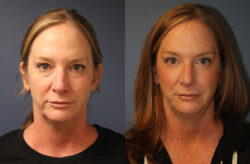
*real patient photo*
What is Blepharoplasty?
Blepharoplasty is also known as “eyelid surgery” or an eyelid lift. The procedure is designed to reduce puffiness, sagging skin or folds, drooping eyelid skin, or wrinkles in the eyelid. An eyelid surgery candidate may choose to have an upper blepharoplasty, lower blepharoplasty, or a combination of upper and lower blepharoplasty, depending on their preferences and needs. This is typically an outpatient surgery performed under local anesthesia. During a consultation for eyelid surgery in Denver, your facial plastic surgeon will make a recommendation regarding which techniques will best meet your goal results for rejuvenated eyelids and an overall more awake, alert, and youthful appearance.
Upper Blepharoplasty
Upper blepharoplasty, or upper eyelid surgery, is a facial plastic surgery procedure that addresses the excess eyelid skin and muscle that hangs low on the upper eyelids. This excess skin may be sitting on the eyelashes and causing you to unconsciously raise your eyebrows, leading to forehead wrinkles. It may also be “hooding” on the sides of your eyes, contributing to deeper shadows. Sometimes, there is so much excess upper eyelid skin that it may be blocking your peripheral vision. Makeup doesn’t stay where you place it and ends up migrating onto the eyebrow skin in an unappealing fashion. Don’t suffer through these symptoms. Consider a blepharoplasty.
Upper blepharoplasty surgery can be performed safely at FacesFirst, with offices in Denver, Lone Tree, and Castle Rock, Colorado. You will be under local anesthesia, and only a thin incision will be made, which is hidden in the natural crease at the top of the upper lids. Plus, there can be minimal downtime of less than a week. You will need a complete eye exam before your procedure.
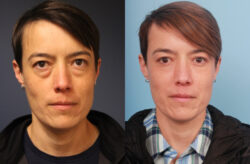
*real patient photo*
Lower Blepharoplasty
Lower blepharoplasty is the term for lower eyelid surgery that addresses laxity and volume changes to the lower eyelid. Like upper blepharoplasty, lower eyelid blepharoplasty is often complemented by skin treatments with peels and volume treatments, such as fillers and fat transfers, to give you the best results possible. Like the upper lid, the lower eyelid is a complex structure that protects your eyes and is highly susceptible to the aging process. There are a number of aging changes that begin in your twenties and thirties that can affect the lower eyelid region. Avoid looking tired and weary through a multitude of approaches that can help you achieve youthful, natural-looking results.
Lower blepharoplasty can be done in many ways depending on a physical exam. Transconjunctival blepharoplasty is performed with a hidden incision on the inside of the lower lids. This procedure is good for patients with good skin and muscle tone who have the appearance of “bags” under the eyes. This is deep eye fat that is revealed when you start losing the fat under your cheek skin in your thirties. Transcutaneous blepharoplasty is performed with a thin incision under the eyelashes, allowing access to the skin, muscle, and excess fat under the lids. This approach is preferred when there is droopiness to the skin or muscle, and more aggressive lifting is needed. Because eyelid skin often heals so well, these incisions are typically imperceptible after the healing process is complete.
Like the upper blepharoplasty procedure, lower eyelid surgery can be done in our office under local anesthesia. Of course, more anesthesia options are always available. You should plan on 7-10 days of swelling and bruising. There is usually little pain and discomfort, though you will want to rest your eyes.
Financing Your Blepharoplasty
We understand that a cosmetic procedure is an investment for your inner and outer beauty. Please don’t hesitate to inquire about financing during your consultation. FacesFirst Cosmetic Surgery has diligently selected CareCredit as it’s trusted partner to help with paying for your aesthetic enhancement. 0% APR and low-payment options are available, contact us to learn more.
Can Botox lift droopy eyelids?
You can often get a very subtle lift of the eyebrow using Botox. This has to be strategically placed by a provider who understands the anatomy. You may see a small lift that occurs in a week or two and can last up to three months on average.
Can droopy eyelids cause blurred vision?
Excessive skin of the upper eyelid can block your vision, much like the shades of a window can block your view. Visual field testing can assess this type of vision problem. Upper blepharoplasty, surgery to remove excess skin of the eyelid, can help this problem.
Can I sleep on my side after eyelid surgery?
You should sleep on your back and in an elevated position after eyelid surgery. The skin around your eyes is very delicate and can easily be damaged from the friction of sleeping on your side. Starting arnica or bromelain which is an ingredient from pineapple before and after surgery can be helpful as well. This can not only impact your recovery but your results as well.
Can you go blind from blepharoplasty?
Blepharoplasty, eyelid surgery, has a risk of blindness, but it is very rare. That is why having it done by a qualified surgeon who follows you closely is so important.
Does eyelid surgery leave scars?
Most eyelid surgery has scars, but they are places in a way that hides their appearance. For example, an eyelid scar may be hidden in the upper eyelid crease or inside of the lower eyelid. Most eyelid skin heals very well and external scars may be thin or imperceptible.
How do you reduce bruising after eyelid surgery?
Keeping your head elevated will prevent blood from collecting in the treatment area and causing increased bruising. Applying a cold compress will also ease your discomfort and reduce the amount of bruising.
How is eyelid surgery performed?
Blepharoplasty is typically performed as an outpatient procedure under local anesthesia with sedation or general anesthesia, depending on the case. For upper eyelids: The surgeon makes an incision along the natural crease of the eyelid to remove excess skin, fat, and sometimes muscle. The incision is carefully closed to minimize visible scarring. For lower eyelids: The incision is made just below the lash line or inside the eyelid (transconjunctival approach). Excess fat is removed or repositioned, and in some cases, the skin is tightened to reduce wrinkles and puffiness. The procedure is customized based on the patient’s needs and desired outcomes.
How is upper eyelid surgery done?
An incision is made along the area where the new eyelid crease will be. Extra skin and fat are then removed and repositioned before the incision is closed with sutures. The scar is hidden within the new eyelid crease.
How long after blepharoplasty do you see results?
Most patients begin to see the initial results of blepharoplasty within 1–2 weeks as swelling and bruising subside. However, the full results typically become evident after 4–6 weeks, once the healing process is more complete and residual swelling has resolved. Scars will continue to refine over several months, becoming less noticeable over time.
How long does eyelid surgery take?
Eyelid surgery usually takes 1–2 hours, depending on whether both the upper and lower eyelids are being treated and the complexity of the procedure.
How much is an eyelid surgery?
The cost of each cosmetic surgery will differ among patients depending on their specific needs and aesthetic goals. We offer CareCredit as a financing option for patients to help them pay for their cosmetic surgery. We will give you specific cost in the office to help guide you in your decision-making.
What can I expect after eyelid surgery?
The appearance of your eyelids may remain swollen and bruised for 1-3 weeks after your procedure. It may take a full 3 months to see the final results, but some people will be completely healed after just one month. Most individuals feel ready to return to work after 10-14 days.
How long does a blepharoplasty last?
The results from a blepharoplasty last 5-7 years, on average. After this time, normal signs of aging start to become visible again.
How can I hide my eyelid surgery?
The amount of swelling, bruising, and other noticeable side effects that are visible after a blepharoplasty varies from patient to patient. Usually, any remaining redness after your initial rest period can be covered with makeup.
Are you put to sleep for eyelid surgery?
Blepharoplasty surgery usually requires general anesthesia. This means that you will be asleep through the duration of your procedure.
Will I have a scar along the incision line?
Most upper eyelid blepharoplasty has a scar that is hidden in the natural crease of the eyelid. For lower blepharoplasty the scars maybe put inside the eyelid or sometimes under the eyelashes depending on what the surgeon thinks will provide the best results. Fortunately, eyelid scars heal very nicely and are often hard to see once they have healed and mature.
When can I wash my face after blepharoplasty?
Cleansing your face and eyelids after surgery is important for protecting from infection and you should begin this 24 to 48 hours after surgery as directed.
When can I expect for the swelling to go down?
Blepharoplasty incisions, like any wound on your body, take time to heal and there is a natural process that will occur from immediate swelling to a mature scar. Since it is on your face it is going to be more obvious and apparent to you. In the first week, there are sutures in visible bruising and swelling. In the weeks following that swelling and redness will gradually go down. A scar may be pink even a month after surgery and will fade over many months up to a year.
Can I apply makeup after eyelid surgery?
Appropriate makeup can be used to cover up bruising and swelling even during the first week after eyelid surgery. In the first week you should avoid any irritating make up near incision lines. In our practice we do have staff that are highly skilled at make up application and specific make up is designed for post surgery patients.
Can a blepharoplasty affect your vision?
Blepharoplasty is primarily a cosmetic procedure, but it can improve vision if sagging upper eyelids are obstructing the field of view. Temporary side effects like blurry vision, dryness, or excessive tearing may occur during the healing process but generally resolve within a few days to weeks. Serious vision complications are extremely rare and can usually be avoided with proper surgical technique and post-operative care.
My eyes look tired even after a full night's sleep; is that something surgery can fix?
Yes, blepharoplasty can address the excess skin, puffiness, and fat deposits that cause a chronically tired appearance. Many patients see a dramatically more rested and refreshed look after surgery, regardless of how much sleep they get.
Can blepharoplasty help if my upper eyelids are actually drooping, not just heavy?
If true drooping is present, the condition may be ptosis, which involves weakened eyelid muscles rather than excess skin alone. A board-certified surgeon like those at FacesFirst can evaluate whether blepharoplasty, ptosis repair, or a combination of both is the right approach for you.
When can I wear contact lenses and eye makeup again after surgery?
Most patients are advised to wait at least two weeks before resuming contact lens wear and eye makeup to allow the delicate tissues to heal properly. Your surgeon will give you personalized guidance based on how your recovery is progressing.
My eyes feel unusually dry after eyelid surgery; is this normal?
Some degree of dryness, irritation, or increased sensitivity is common in the weeks following blepharoplasty as the eyes adjust to their new contour. Lubricating eye drops can provide relief, and symptoms typically resolve on their own, though you should contact your surgeon if dryness is severe or prolonged.
Can blepharoplasty change the shape of my eyes, or does it only address excess skin?
Blepharoplasty can subtly refine the overall shape and appearance of the eyes by removing excess skin and repositioning fat, creating a more open and youthful look. While it is not designed to dramatically alter eye shape the way cosmetic procedures like a canthoplasty might, the results can meaningfully enhance your natural eye contour.
Schedule a Consultation
Take the next step towards your blepharoplasty procedure, schedule your consultation with FacesFirst. Here, you will experience a welcoming atmosphere without judgment. Feel confident in your relationship with your doctor and most importantly, in your results. Our goal is to match how you feel on the inside, with a look of true radiance on the outside. Contact Us Today!



 720-414-3332
 Gallery
  Call Us
  Contact
